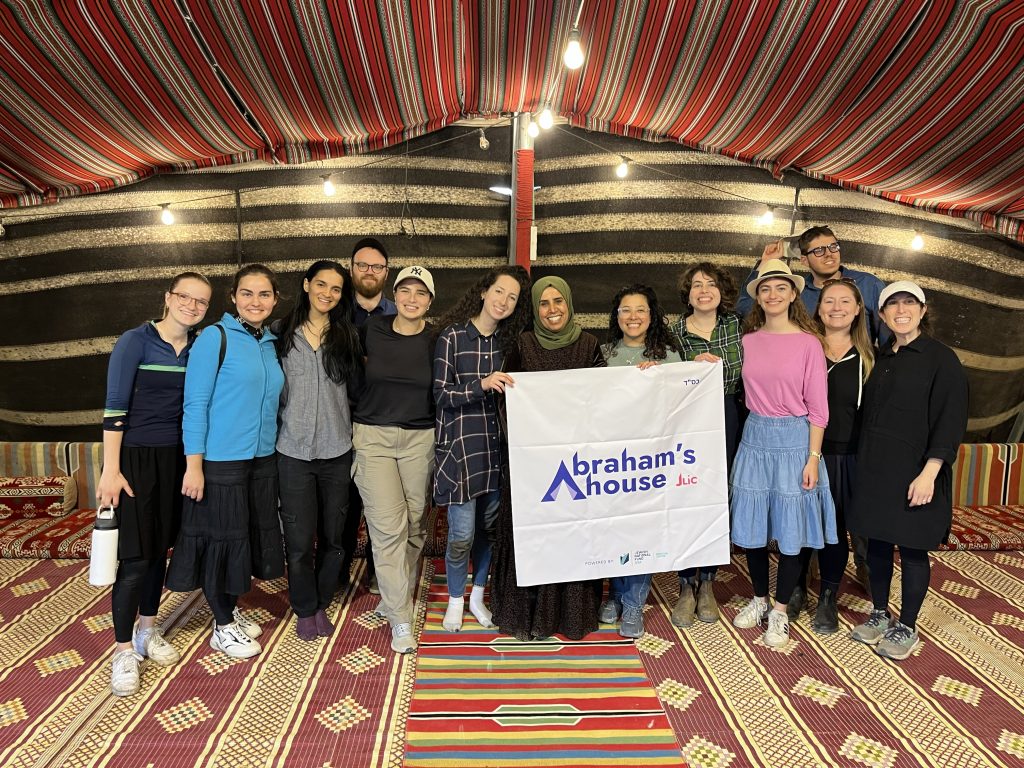
Student leaders set the tone from the start, creating a day that turned initiative into meaningful action.
Abraham’s House fellows in Be’er Sheva and Jerusalem began their morning on local farms, contributing to agricultural work that supports both food production and regional resilience in the Negev.
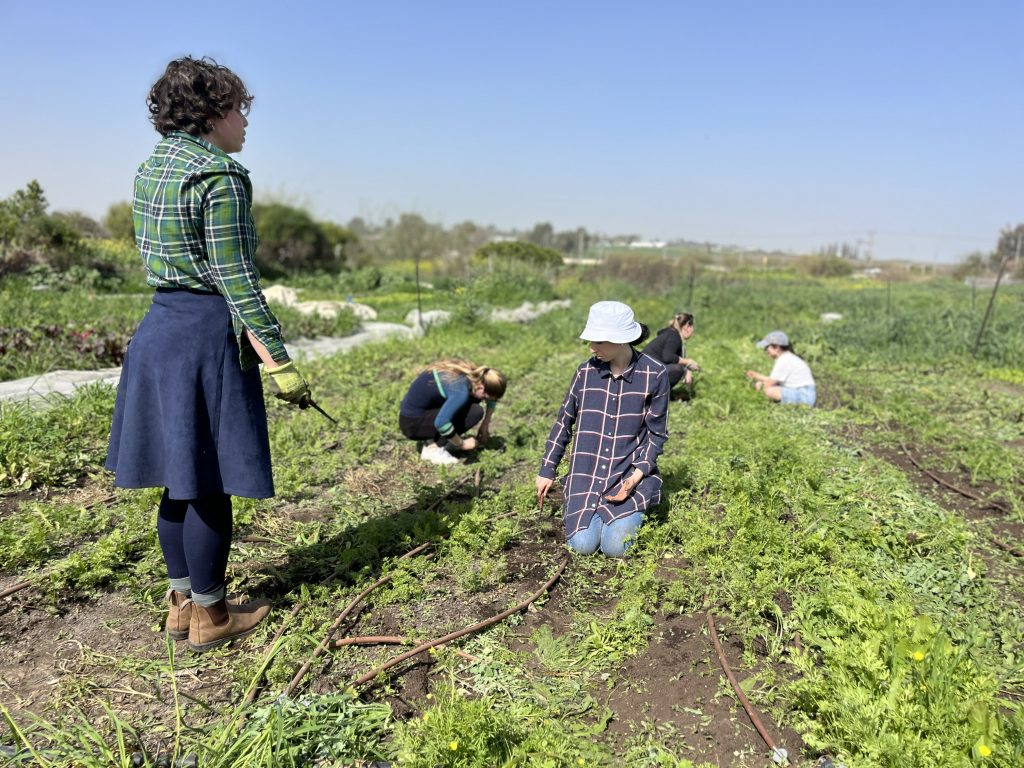
At שורש ועלה (Root and Leaf), a hydroponic greenhouse and organic farm run by Guy Horowitz through Hashomer HaChadash, students joined in the kind of labor that has become increasingly essential in a post–October 7th reality. This particular farm approaches volunteerism with forethought. Students were not only helping meet immediate demands, but contributing to a model that plans ahead, sustains local markets, and strengthens the surrounding economy. Through steady work in the fields, they saw how even a single day of effort could support something much larger than themselves.
The day was organized by Abraham’s House fellow Avigayil, a sociology and anthropology student at Ben-Gurion University who oversees volunteer and chesed initiatives for JLIC BGU. She built the experience with a broader goal in mind: to move beyond campus and engage with the wider fabric of Israeli society.
“I wanted to create this day because community cannot stay within itself,” Avigayil shared. “We have a responsibility to take our strengths outward, to contribute, and to be part of the larger story of rebuilding the Negev.”
Rather than focusing on a single act of service, the experience brought together physical work, reflection, and exposure to communities students may not often encounter.
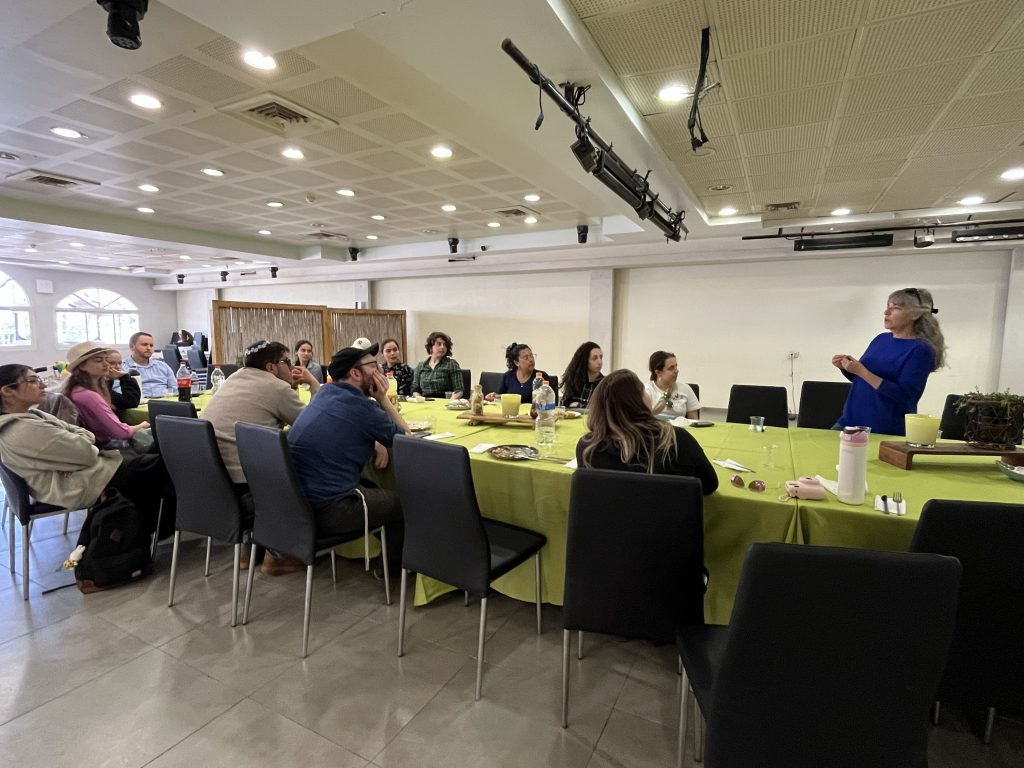
After the morning in the fields, the group traveled to Kibbutz Cramim for lunch. Sitting together, students had space to reflect on their work and learn about the evolving story of kibbutz life in Israel. The pause offered space to connect, creating a natural bridge between action and understanding.
The afternoon extended that perspective further. Inspired by Abraham’s House fellow Devo, who works closely with Bedouin communities through AJEEC, the group visited Project Wadi Attir, an initiative supported by JNF-USA focused on sustainable agriculture and economic development in a Bedouin town in the Negev.
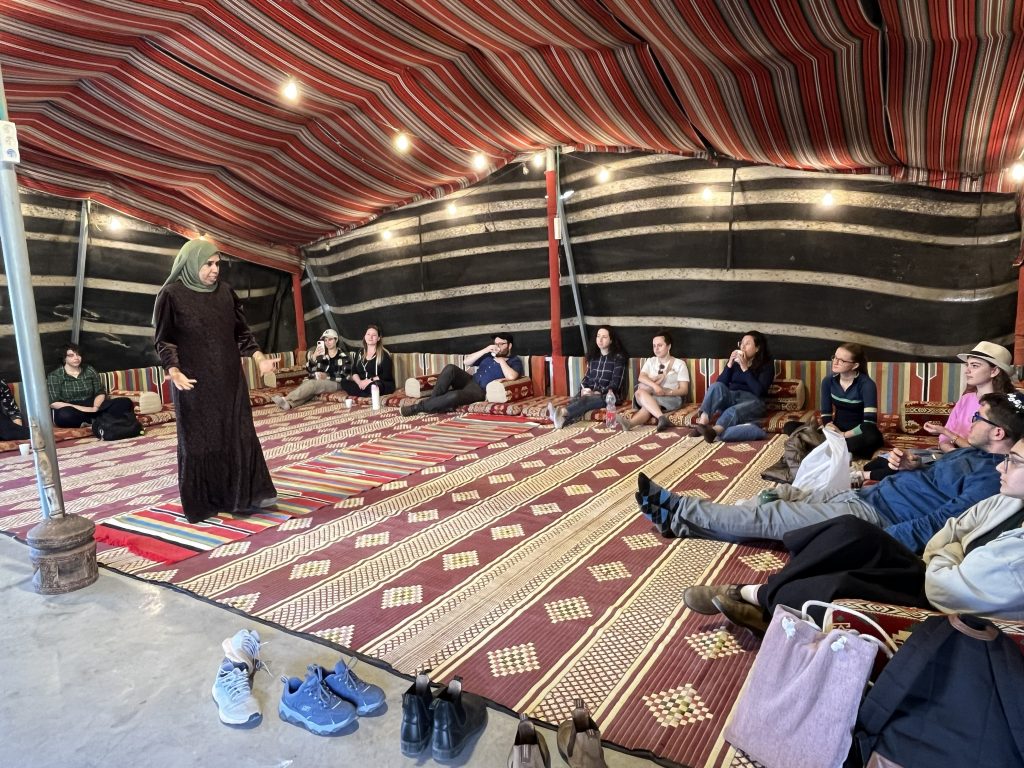
For many students, this marked their first meaningful exposure to Bedouin life and leadership. Walking through the project, they encountered a model that blends traditional knowledge with modern innovation, addressing the challenges of desert living while creating opportunity—particularly for women—within the community. Concepts like sustainability, coexistence, and development became tangible.
Inside the Bedouin tent, the group gathered around Huda, who introduced them to the process of spinning wool by hand. As students tried the technique themselves, Huda shared stories of how women in her community have built new opportunities through craft, creativity, and entrepreneurship. The experience added a deeply personal dimension to the visit, connecting the project’s broader mission to individual lives and voices.
Through leadership, initiative, and a willingness to step beyond familiar spaces, students shaped a day that connected service with learning and action with purpose.